
University of Mumbai – Department of Law
Description
About University of Mumbai – Department of Law
Verified by Lawsection.in Editorial Team | Updated: April 24, 2026
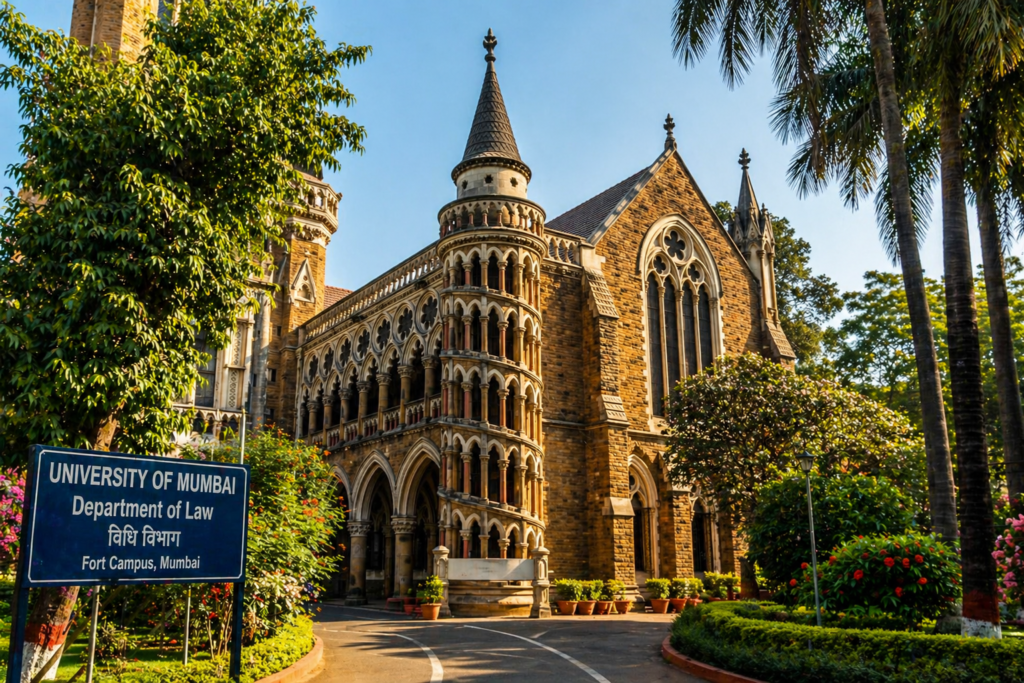
The Department of Law, University of Mumbai, is one of the University’s academic departments dedicated to postgraduate legal education and legal research. Established in 1959, the department has contributed to the development of advanced legal studies through its postgraduate, doctoral, and diploma programmes.
In addition, the University of Mumbai supports a wide network of affiliated law colleges that offer undergraduate legal education across the Mumbai region. Through this broader academic framework, the university contributes significantly to legal education in Maharashtra and India.
The department is located at the University’s Fort Campus in Mumbai, Maharashtra. Furthermore, its location places students within one of India’s major legal, commercial, and judicial centres.
University Snapshot
Location
Mumbai, Maharashtra, India
Established
1959 (Department of Law)
Type
Public University Department (Postgraduate and Research)
Official Website
https://www.mu.ac.in/
Main Courses
LL.M., Ph.D., and Postgraduate Diploma Programmes
Undergraduate Law Education
Offered through affiliated colleges under the University of Mumbai system
Admission Intake
Annual, as per University notifications
Law Programmes Offered by the University of Mumbai Department of Law
The Department of Law primarily focuses on postgraduate legal education, legal research, and academic development.
LL.M. (Master of Laws)
Duration: 2 Years
Eligibility: LL.B. degree or an equivalent qualification recognised by the University, subject to the eligibility requirements prescribed in the latest admission notification
Admission: As per the University of Mumbai’s latest admission notification, applicable merit requirements, and admission regulations
Ph.D. in Law
Duration: As prescribed by University regulations
Eligibility: LL.M. degree or other qualifications recognised under the University’s prevailing Ph.D. regulations
Admission: As per the University’s prevailing Ph.D. admission regulations, including the applicable entrance and selection process
Postgraduate Diploma Programmes
The Department of Law periodically offers postgraduate diploma programmes in specialised areas of law, subject to academic approvals and official notifications issued by the University.
Undergraduate Legal Education Through Affiliated Colleges
Undergraduate legal education under the University of Mumbai system is offered through various affiliated law colleges, subject to approvals and programme availability at individual institutions.
Programmes offered by affiliated colleges may include:
1: LL.B. (3-Year Programme)
2: B.A. LL.B. (5-Year Integrated Programme)
3: B.B.A. LL.B. (5-Year Integrated Programme)
These programmes are not conducted directly by the Department of Law but through affiliated colleges under university regulation.
Why Choose the University of Mumbai Department of Law
The Department of Law focuses primarily on postgraduate and research-oriented legal education. As a result, it attracts students who wish to pursue advanced legal studies, academic research, and legal specialisation.
Key strengths include:
- Focus on postgraduate legal education
- Research-oriented academic environment
- Doctoral research opportunities
- Established academic legacy
- Location within Mumbai’s legal and commercial ecosystem
Moreover, students study in an environment that provides proximity to courts, legal institutions, government offices, corporate organisations, and professional legal networks.
Recognition and Institutional Status
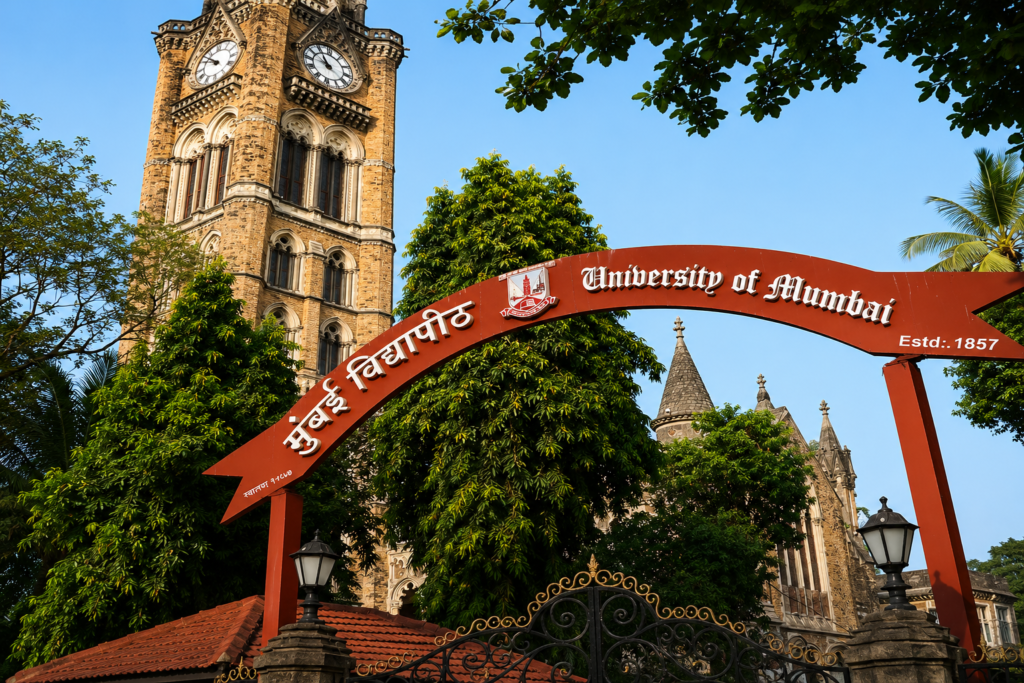
The Department of Law functions under the University of Mumbai, a public university established in 1857 and recognised by the University Grants Commission (UGC).
Key highlights include:
- Part of a UGC-recognised public university
- Academic legacy dating back to 1857
- Established Department of Law since 1959
- Focus on postgraduate legal education and research
Faculty, Research and Academic Environment
The Department of Law promotes legal research and academic scholarship through various educational and research activities.
The academic environment supports:
- Legal research activities
- Academic publications
- Seminars and workshops
- Conferences and scholarly discussions
In addition, faculty members contribute to teaching, legal scholarship, and research activities within their respective areas of expertise.
As a result, students have opportunities to strengthen:
- Legal research skills
- Academic writing abilities
- Critical thinking and analytical skills
- Campus Facilities
The Department of Law operates from the University’s Fort Campus and provides access to University academic resources and library facilities.
In addition, eligible students may apply for University hostel accommodation, subject to seat availability and the University’s applicable hostel policies.
Why Students Consider the University of Mumbai Department of Law
Students often consider the Department of Law because of:
- Its long-standing academic legacy
- Focus on LL.M. and doctoral studies
- Research-oriented learning environment
- Association with the University of Mumbai
- Location within Mumbai, one of India’s leading legal and commercial centres
- Access to the broader University and affiliated college network
Rankings and Reputation
The University of Mumbai is widely recognised as one of India’s established public universities.
Important Note:
- Any national or international rankings generally apply to the University of Mumbai as a whole.
- The Department of Law does not publish an independent official ranking on the University’s website.
The University’s reputation is supported by:
- Its academic heritage
- Research contributions
- Large network of affiliated institutions
- Long-standing presence in higher education
Documents Required for Admission
Applicants may generally be required to submit:
- Relevant qualifying degree certificate
- Academic transcripts or mark sheets
- Valid identity proof
- Recent passport-size photographs
- Category certificate, where applicable
- Migration certificate, if required
- Research proposal and supporting documents for Ph.D. admissions
Document requirements may vary according to programme, category, and University notification.
Admission Process – Step-by-Step
LL.M. Programme
- Visit the official University of Mumbai website
- Review the latest admission notification
- Complete the prescribed application process
- Upload or submit required documents
- Participate in the admission process prescribed in the latest University admission notification
- Complete admission formalities upon selection
Undergraduate Law Programmes (Affiliated Colleges)
- Participate in the admission and counselling process prescribed by competent authorities
- Select an affiliated law college based on eligibility and merit
- Complete admission formalities as required
- Students should verify current admission procedures through official notifications, as processes may change from time to time.
Ph.D. in Law
- Submit the prescribed application
- Provide the required research proposal and supporting documents
- Participate in the entrance and selection process prescribed under the University’s prevailing Ph.D. admission regulations
- Attend the interview or evaluation process, where required
- Complete admission formalities upon selection
Best Law Institutes in Mumbai and Nearby Cities
Students planning to pursue legal education often compare multiple universities before making an admission decision. Those considering the Department of Law, University of Mumbai may also explore other recognised law universities and institutes in Mumbai, Navi Mumbai, Pune, and nearby cities based on their preferred programme, academic interests, career aspirations, and long-term professional goals.
Law universities and institutes differ in their institutional status, admission procedures, programme offerings, faculty expertise, research opportunities, internships, moot court activities, campus facilities, fee structure, and career support. Therefore, applicants should compare these aspects carefully before selecting a law institution that best suits their academic and professional goals.
The Department of Law, University of Mumbai primarily focuses on postgraduate legal education, doctoral research, and specialised legal studies. While the department itself offers LL.M., Ph.D., and postgraduate diploma programmes, the University of Mumbai also supports undergraduate legal education through its network of affiliated law colleges across the Mumbai region. This enables students to pursue legal education within one of India’s oldest and most respected public university systems.
Located at the University’s Fort Campus, the department benefits from its proximity to the Bombay High Court, district courts, government offices, corporate organisations, arbitration centres, and leading law firms. This location provides students with opportunities to engage with Mumbai’s legal ecosystem while pursuing advanced legal studies and research.
However, applicants should always compare the latest eligibility requirements, admission procedures, programme structure, fee details, faculty profile, research opportunities, and academic facilities before making their final admission decision.
Leading Law Universities and Institutes in Mumbai and Nearby Cities
| Law University / Institute | Highlights |
|---|---|
| Department of Law, University of Mumbai | Public university department specialising in LL.M., Ph.D., postgraduate diploma programmes, and legal research. Undergraduate legal education is supported through the University of Mumbai’s affiliated law colleges. |
| Government Law College (GLC), Mumbai | One of India’s oldest law colleges offering undergraduate and postgraduate legal education with a distinguished academic legacy, strong alumni network, and extensive moot court activities. |
| Maharashtra National Law University (MNLU), Mumbai | National Law University offering integrated undergraduate programmes, LL.M., Ph.D., interdisciplinary legal education, and legal research. |
| University of Mumbai Law Academy (UMLA), Mumbai | Constituent institution of the University of Mumbai offering integrated law programmes with emphasis on contemporary legal education and practical learning. |
| Vivekanand Education Society’s College of Law (VESCOL), Mumbai | Affiliated law college offering undergraduate and postgraduate legal education supported by moot court activities, legal aid programmes, and professional skill development. |
| ILS Law College, Pune | Established law college offering undergraduate, postgraduate, diploma, and research programmes with a strong academic tradition and practical legal training. |
| Symbiosis Law School, Pune | Constituent of Symbiosis International (Deemed University) offering integrated law programmes, LL.M., research opportunities, and interdisciplinary legal education. |
| DES Navalmal Firodia Law College, Pune | Recognised law college offering undergraduate and postgraduate legal education with emphasis on practical training, academic development, and student engagement. |
Other Leading Law Universities in India
Students interested in pursuing legal education, postgraduate study, judicial services preparation, litigation, corporate law, or legal research may also consider institutions such as:
- National Law University Delhi (NLU Delhi)
- Indian Law Institute (ILI), New Delhi
- National Law Institute University (NLIU), Bhopal
- Gujarat National Law University (GNLU), Gandhinagar
- Dr. Ram Manohar Lohiya National Law University (RMLNLU), Lucknow
- Faculty of Law, Banaras Hindu University (BHU), Varanasi
Before selecting a law university or institute, applicants should compare factors such as institutional recognition, programme eligibility, admission process, curriculum, fee structure, faculty expertise, research opportunities, internships, moot court exposure, scholarships, campus facilities, placement support, and alumni network.
Students should also evaluate whether an institution’s academic environment aligns with their intended career pathway, including litigation, judiciary, corporate law, legal research, academia, public policy, civil services, or higher legal studies. By comparing these aspects carefully, applicants can make a more informed admission decision and choose a law institution that best aligns with their academic interests, career objectives, preferred location, and financial considerations.
FAQs – University of Mumbai (Department of Law)
1. Does the University of Mumbai offer LL.B. directly through its Department of Law?
No. The Department of Law primarily focuses on postgraduate and research programmes. Undergraduate legal education is generally offered through affiliated law colleges under the University of Mumbai system.
2. Is the LL.M. programme at the University of Mumbai suitable for postgraduate legal studies?
The LL.M. programme is designed for students interested in advanced legal studies, specialisation, research, and academic development.
3. What is the admission process for LL.M. at the University of Mumbai?
Applicants must follow the admission procedure notified by the University, including meeting eligibility requirements and completing the prescribed application process.
4. Does the Department of Law provide placement support?
The Department primarily focuses on academic and research development. In addition, students may explore internship, networking, and professional opportunities within Mumbai’s broader legal and corporate environment.
5. What distinguishes the Department of Law from many undergraduate law colleges?
The Department primarily emphasises postgraduate legal education, legal research, and doctoral studies rather than undergraduate legal instruction.
Study LLM Abroad: Top Law Universities in UK, USA & Canada
Planning to pursue an LLM abroad? Explore carefully curated and verified guides to top-ranked law universities in the United Kingdom, United States, and Canada. These country-wise pages provide structured information on admission requirements, eligibility criteria, tuition fees, intakes, scholarships, and career prospects — based on official university sources and updated as of 2026. Compare destinations confidently and choose the best pathway for your global legal career.
LLM In UK
Find the best Law Universities in United Kingdom.
LLM In USA
Explore Top-ranked Law Universities in the USA.
LLM in Canada
Canada’s Top-ranked Law Universities listed here.
Conclusion
The Department of Law, University of Mumbai, provides a structured environment for postgraduate legal education, legal research, and academic development. Furthermore, its long academic history, research orientation, and association with one of India’s oldest public universities contribute to its role in postgraduate legal education and legal research in India.
At the same time, the University’s extensive network of affiliated law colleges supports undergraduate legal education across the region. Consequently, the University of Mumbai continues to play an important role in legal education and legal scholarship in India.
Disclaimer
This information has been compiled from official University of Mumbai sources and publicly available academic information. While reasonable efforts have been made to ensure accuracy, applicants should always refer to the official University website and current admission notifications for the latest programme details, eligibility requirements, fees, and admission procedures.
This information is curated by Lawsection’s editorial team as part of our Study Law Abroad and Global Law College Directory initiatives.
Address






Cardiff Metropolitan University, UK – Law Courses, Fees, Eligibility, Admissions 2026
- Government
- LLB (3 Years), LLM Abroad, Juris Doctor (JD), PhD in Law




Wrexham University Law Courses in UK (2026): Fees, Entry Requirements, Admissions & Student Guide
- Government
- LLB (3 Years), LLM Abroad, Juris Doctor (JD), PhD in Law



Cardiff University, UK – Law Courses, Fees, Admission Requirements & Study Opportunities (2026)
- Government
- LLB (3 Years), LLM Abroad, Juris Doctor (JD), PhD in Law


Swansea University Law School (UK): Courses, Fees, Eligibility, Admissions, Rankings & Study Guide 2026
- Government
- LLB (3 Years), LLM Abroad, Juris Doctor (JD), PhD in Law


Bangor University, UK – Law Courses, Fees, Eligibility, Admissions & Bangor Law School Guide (2026)
- Government
- LLB (3 Years), LLM Abroad, Juris Doctor (JD), PhD in Law



Queensland University of Technology Law School Australia: Courses, Fees, Eligibility, Admissions & Career Opportunities 2026
- Government
- LLB (3 Years), LLM Abroad, Juris Doctor (JD), Doctor of Juridicial Science (S.J.D), PhD in Law



Griffith University, Australia – Complete Guide to Law Programs, Fees, Eligibility, Campuses & Admissions (2026)
- Government
- LLB (3 Years), LLM Abroad, Juris Doctor (JD), Doctor of Juridicial Science (S.J.D), PhD in Law
